Facts and Figures
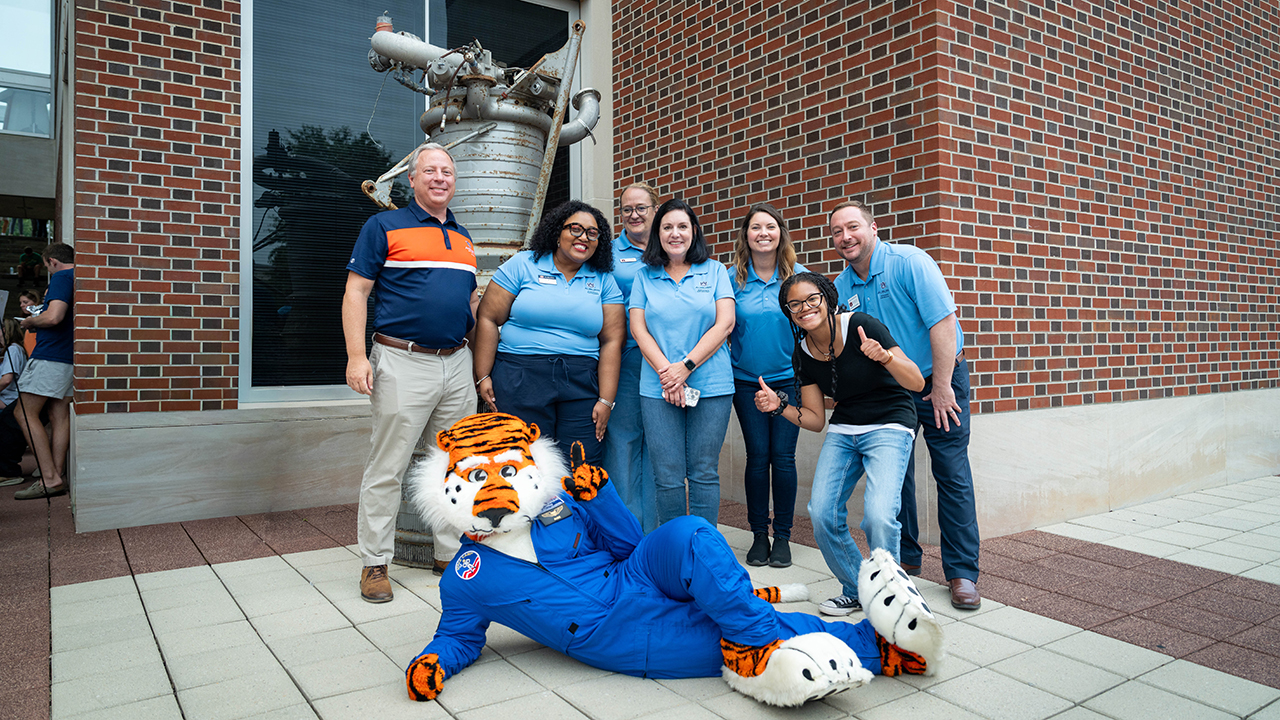
Aerospace engineers design, develop, test and operate aircraft, spacecraft and related systems. Drawing on expertise in aerodynamics, propulsion, structures, dynamics, controls and performance, they solve challenges involving flight both within and beyond Earth’s atmosphere.
By the Numbers
Auburn Aerospace combines a long history in aviation and space with a growing community of students, faculty and researchers.
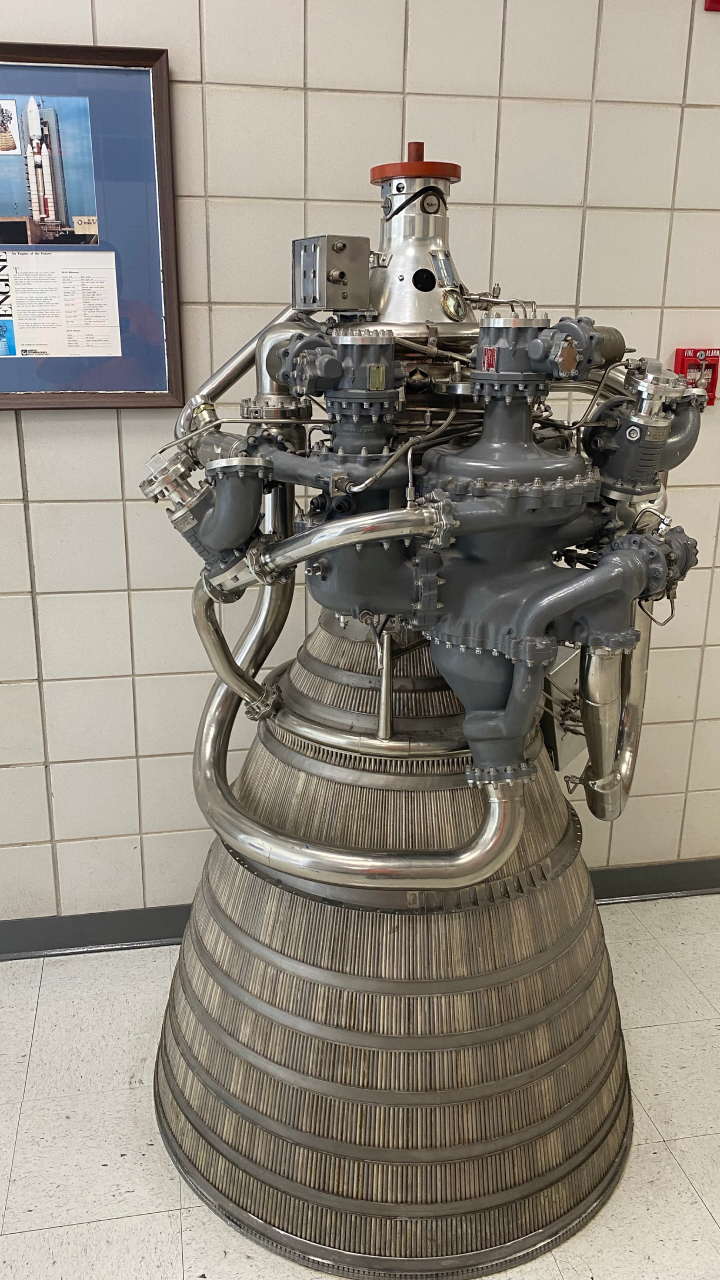
Explore the Aerospace Engineering Curriculum
Auburn aerospace engineering students develop expertise across the major disciplines involved in aircraft and spacecraft design, performance and operation.
Aerodynamics
Study airflow and the forces acting on aircraft and spacecraft.
Aerospace Design
Bring multiple engineering disciplines together to design aerospace vehicles and systems.
Aerospace Structures and Materials
Explore the materials and structural systems that allow aerospace vehicles to withstand demanding environments.
Aircraft Performance
Analyze how aircraft perform across different flight conditions and missions.
Flight Dynamics and Control
Study aircraft motion, stability, guidance and control.
Orbital Mechanics and Astrodynamics
Explore spacecraft trajectories, orbital motion and space mission design.
Propulsion
Study the systems that generate thrust for aircraft, rockets and spacecraft.
Graduate Study in Aerospace Engineering
Graduate students pursue advanced study and research in areas including aerodynamics, astrodynamics, controls, flight dynamics, orbital mechanics, propulsion and structures under the guidance of aerospace engineering faculty.
M.S. — Thesis
Research-focused master's degree
- Includes graduate aerospace engineering coursework
- Includes 6 hours of research and thesis
- Culminates in an oral examination covering the student's research and thesis
M.S. — Non-Thesis
Coursework-focused master's degree
- At least 21 hours in aerospace engineering
- No thesis requirement
- Available on campus or entirely online
Ph.D.
Advanced research and dissertation
- Includes 30 hours of graded graduate coursework
- Includes advanced science and mathematics coursework
- Includes research and dissertation requirements
*Beyond the bachelor's degree.
Explore aerospace engineering laboratories by research area:
Materials and Structures
Advanced Materials and Processing Laboratory
The Advanced Materials and Processing Laboratory (AMPL), led by Suhasini Gururaja, studies the long-term sustainability of composite structures, with a focus on processing methods and secondary manufacturing effects. Research combines analytical, numerical and experimental approaches to composite behavior and characterization.
Aerospace Structures Reliability Laboratory
The Aerospace Structures Reliability Laboratory, led by Wen Luo, studies rare-event failures in advanced aerospace materials and develops lightweight, strong and highly reliable structures. Research includes reliability engineering, structural mechanics, composite materials and smart structures.
Polymer Mechanics Research Laboratory
The Polymer Mechanics Research Laboratory, led by Russell Mailen, studies polymers and polymer composites, including shape-memory polymers and multifunctional materials. Research includes finite element analysis, composite fabrication and polymer characterization.
Space Sciences
Aero-Astro Computational and Experimental Laboratory
The Aero-Astro Computational and Experimental Laboratory, led by Ehsan Taheri, develops rapid, reliable algorithms for aerospace control and trajectory design. Research includes orbital maneuvers and space trajectories, as well as the guidance and control of unmanned aerial vehicles, launch vehicles and planetary landing vehicles.
Immersive, Interactive and Intelligent Space Dynamics Laboratory
The Immersive, Interactive and Intelligent Space Dynamics Laboratory, led by Davide Guzzetti, focuses on space mission design, human-machine collaboration and autonomous space systems. Research also explores the use of extended reality to improve mission design processes.
Fluid Dynamics, Aerodynamics, and Propulsion
Advanced Flow Diagnostics Laboratory
The Advanced Flow Diagnostics Laboratory, led by Brian Thurow, develops and applies high-speed, three-dimensional flow diagnostics for unsteady 3D flow fields. Research applications include flapping-wing flight, shock-boundary-layer interactions and combustion.
Advanced Propulsion Research Laboratory
The Advanced Propulsion Research Laboratory (APRL), led by Joseph Majdalani, develops mathematical modeling and simulation techniques for combustors and propulsion systems, with research in rocket-engine flowfields, combustion instabilities and vorticity dynamics.
Aero-Propulsion Related Systems Modeling, Simulation and Optimization
The Aero-Propulsion Related Systems Modeling, Simulation and Optimization Laboratory, led by Roy Hartfield, develops computational models of aerodynamic and propulsion systems for vehicle performance and trade studies, balancing accuracy with computational efficiency.
Applied Fluids Research Group
The Applied Fluids Research Group, led by Vrishank Raghav, uses fluid dynamics and experimental techniques to study aerospace and biomedical engineering challenges. Research includes helicopters, wind turbines, rotary UAVs, and cardiovascular and respiratory flows.
Combustion Physics Laboratory
The Combustion Physics Laboratory, led by David Scarborough, studies combustion instabilities and the interaction between acoustic and heat-release processes. Research ranges from liquid rocket engine combustion to wildland fire mitigation.
Computational Fluids Group
The Computational Fluids Group, led by Nek Sharan, develops computational methods for turbulent mixing, combustion and fluid-structure interactions, with applications in aerodynamics and propulsion. Research also integrates data-driven methods and high-performance computing to improve flow predictions and develop reduced-order models.
Reacting Flow Diagnostics Laboratory
The Reacting Flow Diagnostics Laboratory, led by James Michael, develops laser spectroscopy and optical diagnostic techniques for high-speed propulsion and combustion environments, including non-equilibrium, multiphase and rapidly changing flows.
Vortex Dynamics and Basic Fluid Flows Laboratory
The Vortex Dynamics and Basic Fluid Flows Laboratory, led by Anwar Ahmed, uses water and wind tunnels to study vortical flows, unsteady aerodynamics and flow control. Research also includes aero-optics in compressible and incompressible flows.
Vehicle Systems, Dynamics, and Design
Vehicle Systems, Dynamics and Design Laboratory
The Vehicle Systems, Dynamics and Design Laboratory (VSD2L), led by Imon Chakraborty, focuses on vehicle systems modeling, flight dynamics and early-stage aerospace vehicle design. Research includes simulation, performance analysis, vehicle sizing and design tradeoffs.
Aerospace engineering students are encouraged to participate in campus organizations, teams and clubs, gaining hands-on experience in teamwork, leadership and project management.
-
Auburn's student branch of the American Institute of Aeronautics and Astronautics (AIAA) connects students with the broader aerospace community through departmental events, professional development opportunities and participation in regional and national AIAA conferences.
-
The Auburn Space Technologies and Robotics Organization (ASTRO) gives students hands-on experience developing robotic systems for aerospace applications. Projects explore mobility systems, multi-agent robotics and technologies designed to operate in extreme environments such as space and planetary surfaces.
-
The Auburn University Rocketry Association (AURA) designs, builds and launches high-powered rockets. The team competes in events including the NASA Student Launch Challenge, the Argonia Cup and the International Rocket Engineering Competition.
-
The Auburn University Small Satellite Program (AUSSP) is a space science, technology and workforce development program that gives students experience designing, building, testing and operating CubeSats. The interdisciplinary program involves students from across STEM and other academic fields.
-
Auburn's Design, Build and Fly (DBF) Team is a student-led organization that designs, builds and flies remote-controlled aircraft for the annual AIAA Design, Build, Fly competition. Students apply classroom knowledge through hands-on aircraft design, manufacturing and testing.
-
The Launch and Propulsion Society gives students hands-on experience with hobby rocketry and vertical launch vehicles. Members explore the engineering design process, vehicle stability, propulsion and other fundamentals of rocket design and flight.
-
Sigma Gamma Tau is the national aerospace engineering honor society. Auburn's chapter has recognized outstanding aerospace engineering students since 1965, with membership primarily including juniors and seniors as well as selected graduate students, faculty and alumni.
Scholarship Opportunities
The Samuel Ginn College of Engineering and the Department of Aerospace Engineering provide scholarship opportunities for students throughout their academic careers. Students must apply through the Auburn University Scholarship Opportunity Manager (AUSOM) to be considered.
Explore Engineering ScholarshipsWhere an Auburn Aerospace Degree Can Take You
Auburn aerospace engineering graduates build careers across industry, government, research and academia. Their expertise in aerodynamics, flight dynamics, propulsion, structures and structural dynamics has contributed to advances in aviation, space exploration and national defense.
A Legacy of Aerospace Impact
Auburn alumni have helped shape major milestones in aviation and spaceflight while continuing to lead across today's aerospace industry.
Spaceflight
Gerald Smith '61 and Robert Champion '86 contributed to the space shuttle program, including work related to its design, maneuverability and safety.
Aviation and Defense
Charles E. "Buddy" Davis '59 contributed to developments involving the Thor rocket, Harpoon missile and KC-10 aerial refueling platform. Davis Hall is named in his honor.
Aviation Safety
Lorenda Ward '90, '92 has served as a senior investigator with the National Transportation Safety Board, investigating aviation crashes and incidents around the world.
Aerospace Leadership
Auburn aerospace alumni have held leadership and technical roles with organizations including NASA, GE Aviation, Relativity Space and other major aerospace employers.
Other notable alumni include Joseph Pelfrey '00, Clay Walker '09, '11, Joseph Moore '08, Emily Zieman '02, '04, Wendell Mead '63, '66 and Nelda Lee '69.